
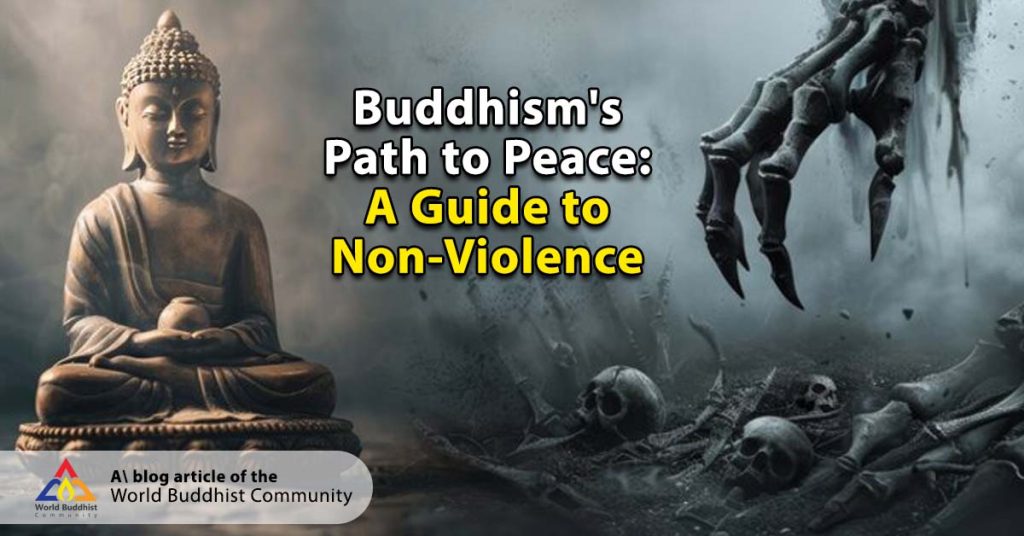
Have you ever wondered how Buddhism, one of the world’s most peaceful religions, views war and conflict? Let’s explore this fascinating topic through the lens of Buddhist wisdom and real-world examples.
The Heart of Non-Violence
At its core, Buddhism embraces ahimsa, or non-violence, as a fundamental principle. Imagine you’re walking down a street and see an ant. Most people wouldn’t think twice about stepping on it. But Buddhism teaches us to value all life, no matter how small. As the Buddha beautifully expressed:
“All tremble at violence; all fear death. Putting oneself in the place of another, one should not kill nor cause another to kill.”
The Ripple Effect: Understanding Karma
Think of karma like throwing a stone into a pond – every action creates ripples that affect everything around it. Buddhist teachings explain that actions driven by negative emotions like anger and greed lead to suffering. War, being an extreme expression of these emotions, creates massive negative ripples that affect countless lives.
The Power of Compassion
Buddhism offers a powerful alternative to conflict: loving-kindness and compassion. Imagine a mother protecting her child – that’s the level of care Buddhism encourages us to have for all beings. This isn’t just philosophical; it’s practical wisdom for creating peace.
We’re All Connected
Here’s a beautiful example from Buddhist teacheing : Look at a sheet of paper. Within it, you can see the cloud that brought rain to grow the tree, the logger who cut it, the sun that helped the tree grow. Everything is connected. When we truly understand this, harming others becomes unthinkable because we realize we’re hurting ourselves too.
Real-World Impact
Consider Emperor Ashoka, one of India’s greatest rulers. After witnessing the devastation of war, he embraced Buddhism and transformed from a fierce warrior into a champion of peace. He built hospitals, planted trees, and spread messages of compassion throughout his empire. His story shows how Buddhist principles can change not just individuals, but entire societies.
Modern Applications
The Dalai Lama, Tibet’s spiritual leader, continues this tradition today. Despite facing serious conflicts, he consistently advocates for non-violent solutions. His famous words remind us that “world peace must develop from inner peace.”
Practical Steps for Peace
Buddhism offers practical ways to resolve conflicts:
– Practice mindful listening to truly understand others
– Develop compassion through meditation
– Seek win-win solutions rather than victory at any cost
– Address the root causes of conflict rather than just the symptoms
Final Thoughts
While Buddhism recognizes that the real world sometimes presents complex challenges, its message is clear: peace starts within each of us. By cultivating inner calm and compassion, we contribute to a more peaceful world.
Think of it this way: just as a single candle can light countless others without diminishing its own flame, peace can spread from person to person, creating positive change in our communities and beyond.
This perspective isn’t just for Buddhists – it offers wisdom for anyone seeking to create a more peaceful world. After all, in our increasingly connected world, the ancient Buddhist insight that we’re all interconnected has never been more relevant.
@ Buddhika Prasanna