
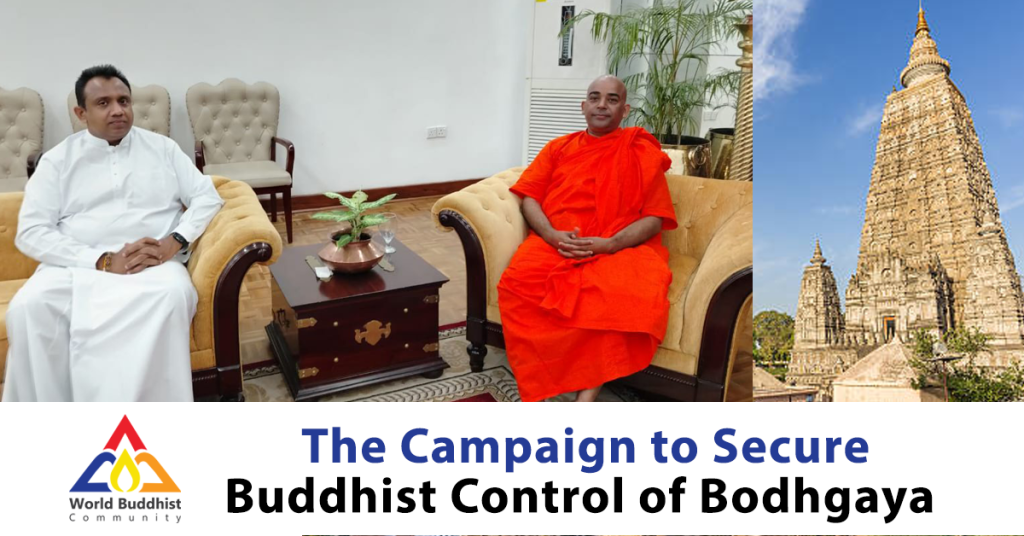
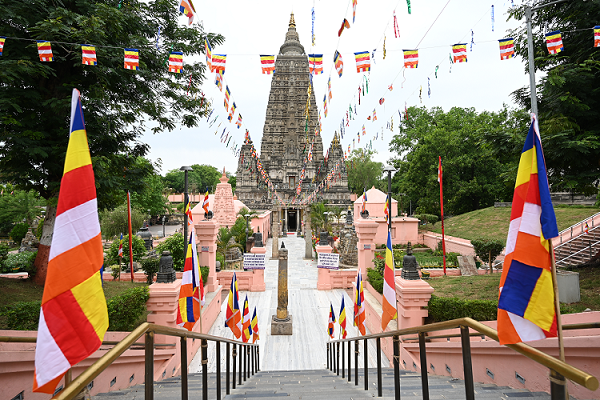
Bodhgaya, the sacred site where Lord Buddha attained enlightenment under the Bodhi tree, stands as one of Buddhism’s most venerated locations. Despite its profound significance to Buddhists worldwide, the governance and management of this holy site has long been a matter of contention. In recent years, Indian Buddhists have launched a significant campaign to transfer the administrative authority of Bodhgaya to Buddhist management. This article explores the movement’s origins, current developments, and the international coalition forming to support this sacred cause.
Historical Context of Bodhgaya
Bodhgaya’s importance in Buddhist history cannot be overstated. Located in Bihar, India, it marks the spot where Siddhartha Gautama meditated for 49 days (7 weeks) and attained enlightenment, becoming Buddha. For over 2,500 years, this site has drawn pilgrims from across the world who come to pay homage at this spiritual wellspring of Buddhism.
Despite its Buddhist significance, Bodhgaya’s management has changed hands numerous times throughout history. Following the decline of Buddhism in India, the site fell into neglect until the late 19th century when Buddhist revivalism began. In 1949, the Bihar government passed the Bodhgaya Temple Act, establishing a management committee with both Hindu and Buddhist members, but with Hindu majority control – a situation that has persisted to the present day.
The Current Movement
Indian Buddhists have now initiated a powerful movement to transfer administrative authority of Bodhgaya to Buddhist management. This campaign represents not merely an administrative shift but a profound effort to reconnect the sacred site with its spiritual roots and ensure its preservation according to Buddhist principles and traditions.
The World Buddhist Community organization has already launched an online petition (https://chng.it/4B6YhBL9CZ), creating a platform for Buddhists and supporters of religious freedom worldwide to voice their support for this cause. This petition marks just the beginning of what organizers envision as a sustained, global campaign.
Leadership and Vision
Recently, Venerable Mahendra, a prominent Buddhist monk residing at Kushinagar in Uttar Pradesh, India, has visited Sri Lanka to build international support for the movement. As the former chairman of the International Buddhist Research Institute and a powerful advocate for preserving and promoting India’s Buddhist heritage, Venerable Mahendra brings significant credibility and vision to this initiative.
In a recent extensive discussion, Venerable Mahendra shared his insights on the historical, cultural, and spiritual significance of returning Bodhgaya’s management to Buddhist hands. He emphasized that this movement is not merely about administrative control but about ensuring that one of Buddhism’s most sacred sites is maintained in a manner that honors its spiritual significance and allows for authentic Buddhist practices and traditions to flourish.
International Coordination
The World Buddhist Community organization is positioning itself as the coordinating body for this global effort. Under new leadership, the organization plans to unite Buddhist organizations from all Buddhist countries in a long-term, strategic campaign. This unprecedented level of international Buddhist cooperation aims to create a unified voice that can effectively advocate for the transfer of Bodhgaya’s management.
The strategy involves diplomatic engagement with the Indian government, raising awareness among international bodies concerned with religious freedom and cultural heritage, and mobilizing grassroots support among Buddhist communities worldwide.
Legal and Historical Arguments
The campaign’s foundation rests on several compelling arguments:
- Religious Significance: As Buddhism’s most sacred site of enlightenment, Bodhgaya holds a unique place in Buddhist cosmology and practice that merits special consideration.
- Historical Precedent: Before the decline of Buddhism in India, the site was managed by Buddhist monastics for centuries.
- International Cultural Heritage: UNESCO recognizes the Mahabodhi Temple Complex at Bodhgaya as a World Heritage Site, acknowledging its universal significance.
- Religious Freedom: The movement argues that proper Buddhist management would better serve the spiritual needs of millions of Buddhist pilgrims who visit annually.
- Preservation Expertise: Buddhist institutions have demonstrated expertise in preserving ancient sites according to traditional standards while accommodating modern pilgrimage needs.
Challenges and Considerations
The campaign faces several challenges, including:
- Political Sensitivities: Religious site management in India often involves complex interfaith and political considerations.
- Legal Frameworks: The current management structure is established by state law, requiring legislative changes.
- Diverse Buddhist Traditions: Ensuring representation of various Buddhist traditions (Theravada, Mahayana, Vajrayana) in any new management structure.
- Transition Planning: Developing a comprehensive plan for a smooth transition that respects all stakeholders.

The Path Forward
The movement envisions a phased approach:
- Awareness Building: Educating Buddhists worldwide about the current management situation at Bodhgaya and the rationale for change.
- Coalition Building: Strengthening partnerships among Buddhist organizations across countries and traditions.
- Diplomatic Engagement: Respectful dialogue with Indian authorities at state and national levels.
- Management Proposal: Developing a detailed, inclusive proposal for Buddhist management that addresses concerns of all stakeholders.
- International Support: Engaging UNESCO and other international bodies to support preservation of the site’s authentic Buddhist character.
Call to Action
This movement represents a historic opportunity for Buddhists worldwide to unite in support of reclaiming administrative authority over one of their most sacred sites. The petition launched by the World Buddhist Community provides an immediate avenue for individuals to express their support.
Beyond signing the petition, Buddhists and supporters can:
- Raise awareness about this issue in their local communities and temples
- Engage with Buddhist organizations in their countries to support the international coalition
- Participate in peaceful advocacy efforts directed at relevant authorities
- Support fundraising initiatives for the campaign’s activities
- Visit Bodhgaya as pilgrims to demonstrate the site’s ongoing significance to the global Buddhist community
The movement to secure Buddhist administrative authority over Bodhgaya represents more than a change in management structure. It embodies a profound aspiration to reconnect one of Buddhism’s most sacred sites with its spiritual roots and ensure its preservation and development in accordance with Buddhist values and traditions.
As Venerable Mahendra prepares to return to Bodhgaya to continue this important work, and as the World Buddhist Community organization develops its long-term strategy, a historic opportunity has emerged for Buddhists worldwide to unite in support of this noble cause. The time has come for collective action to ensure that the place where Buddha attained enlightenment is managed in a manner that honors its profound spiritual significance for generations to come.
Through peaceful, respectful, and persistent engagement, the movement aims to achieve a management transition that will benefit not only Buddhist pilgrims but also contribute to the authentic preservation of this invaluable world heritage site. For Buddhists worldwide, supporting this cause represents a meaningful way to honor the Buddha’s legacy and ensure that Bodhgaya remains a vibrant spiritual center for centuries to come.